Short Answer: Benefits confusion is common, but it is not inevitable. By addressing the three biggest pain points, unclear terminology, unclear plan and account distinctions, and decision overload, employers can help their teams make more informed choices. Clear communication helps reduce HR’s workload during enrollment season and ensures employees get real value from their benefits.
Open enrollment season brings the same wave of questions every year. Employees frequently ask what the difference is between an HSA and an FSA, and why their coworker’s plan seems so different from their own.
Based on the questions our team hears most often, three areas cause the vast majority of employee benefits confusion. Understanding these pain points can help employees make better decisions about their coverage.
1. Benefits Terminology
The language of health insurance is one of the biggest barriers to understanding. Terms like deductibles, copays, coinsurance, and out-of-pocket maximums get mixed up constantly, and that confusion directly affects how employees perceive their actual costs.
What These Terms Actually Mean
Here is a quick breakdown employees can reference:
-
Deductible: The amount you pay out of pocket before your insurance starts covering costs.
-
Copay: A fixed fee you pay for a specific service, like $30 for a doctor visit.
-
Coinsurance: The percentage of costs you share with your insurer after you meet your deductible.
-
Out-of-pocket maximum: The most you will pay in a year before your insurance covers 100% of costs.
When employees confuse these terms, they often misjudge what a plan will cost them. A plan with a low premium but a high deductible can cost more in a year with increased healthcare utilization than a plan with a higher premium and lower out-of-pocket costs.
2. Health Plan and Account Distinctions
The second major source of confusion involves comparing plan types and account types side by side. Employees often struggle to tell the difference between a High-Deductible Health Plan (HDHP) and a traditional plan, and between a Health Savings Account (HSA) and a Flexible Spending Account (FSA).
HDHP vs. Traditional Plans
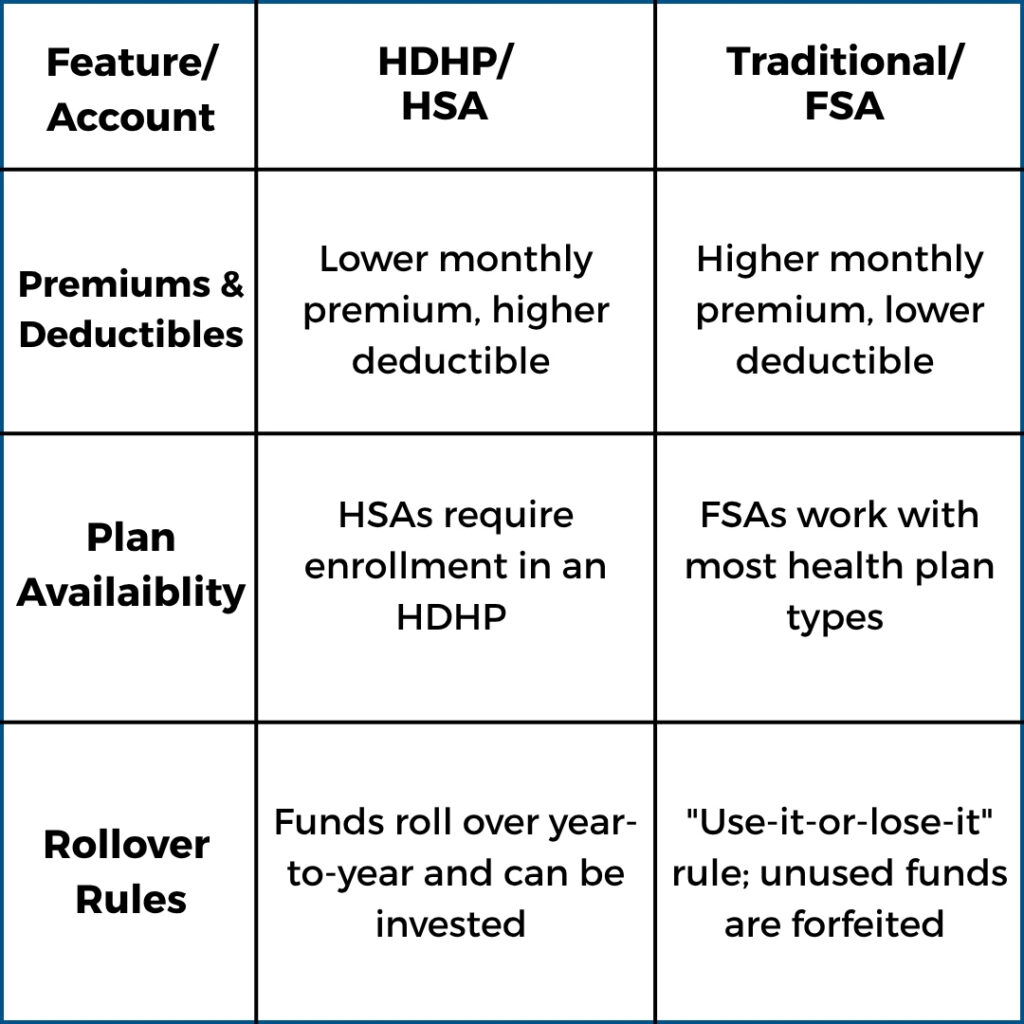
An HDHP typically has a lower monthly premium but a higher deductible, meaning employees pay more before coverage kicks in. A traditional plan usually has a higher premium but a lower deductible, so costs are more predictable throughout the year. The right choice depends on an employee’s expected healthcare needs and their comfort with financial risk.
HSA (Health Savings Account) vs. FSA (Flexible Spending Account)
An HSA is only available to employees enrolled in an HDHP. The funds roll over year to year and can even be invested. An FSA is available with most plan types, but funds typically must be used within the plan year, or they are forfeited. This “use it or lose it” rule is one of the most common points of confusion, and employees frequently assume the accounts work identically when they do not.
3. Too Many Choices, Not Enough Clarity
An article from Businessolver shows that 85% of employees are confused about their benefits, and this confusion has a real consequence: many default to the same plan year after year rather than exploring whether a better option exists.
This pattern is understandable. Benefits enrollment often happens during a short window, the language is dense, and employees rarely have time to fully compare their options. As a result, people can end up overpaying for coverage they don’t need or being underinsured for the care they actually use.
How Employers Can Reduce Benefits Confusion
Simplifying benefits communication does not require a complete overhaul of your enrollment process. Small, consistent changes can make a measurable difference in how confident employees feel about their choices.
-
Use plain language. Use short, relatable definitions and real-world examples.
-
Create comparison tools. Side-by-side charts of plan types and account types help employees see differences at a glance.
-
Offer decision support. Short guides, calculators, or one-on-one sessions can help employees estimate their actual costs under each plan.
-
Remind employees to review annually. Encourage employees to reassess their choices each year instead of auto-renewing by default.
Frequently Asked Questions
What is the difference between a copay and coinsurance? A copay is a fixed dollar amount you pay for a specific service. Coinsurance is a percentage of the cost that you share with your insurer after meeting your deductible.
Can I have both an HSA and an FSA? Generally no. HSAs require enrollment in an HDHP, and having an FSA at the same time is usually not allowed, though limited-purpose FSAs are sometimes an exception.
Why do so many employees stick with the same benefits plan every year? Most employees find the decision overwhelming and default to their current plan rather than compare new options. This often happens because of unclear terminology and limited time during enrollment, not because the current plan is actually the best fit.
What happens to unused FSA funds at the end of the year? In most cases, unused FSA funds are forfeited under the “use it or lose it” rule, though some employers offer a grace period or a small carryover amount.
The post Why Employee Benefits Feel So Confusing (and How to Fix It) appeared first on The Accel Group.