Common Home Risks During Winter
Frozen Pipes
Frozen pipes are a frequent winter issue that can lead to extensive water damage. To prevent this, keep your home’s temperature above 60°F (even if you’re away/traveling) and insulate pipes in colder areas like basements, crawl spaces, and attics. You can also open kitchen and bathroom cabinet doors to allow warm air from your home to circulate to the pipe. Lastly, keep faucets on a slow drip.
Fire Hazards
As temperatures drop, furnaces, fireplaces, and chimneys work overtime to keep your home warm, increasing the risk of fire hazards. To stay safe, have your chimney inspected and cleaned annually, keep space heaters away from flammable materials, and never leave space heaters unattended.
Slips and Falls
Ice and snow accumulation around your home can create dangerous slip-and-fall hazards. Ensure that walkways and driveways are clear of snow and ice, and make sure to use salt and sand to improve traction. Assume all areas are slippery! It’s also a good idea to stay distraction-free when walking on the ice, so keep items such as your phone in a pocket or bag when walking on snow and ice.
Common Auto Risks During Winter
Slippery Roads
Ice and snow on the roads make it difficult for your vehicle to maintain traction, causing a higher risk of accidents. Here are a few tips to consider:
- Keep a safe distance between your vehicle and the one ahead to allow for longer braking times.
- Install winter tires or snow chains; they are designed to have better traction on snow and ice.
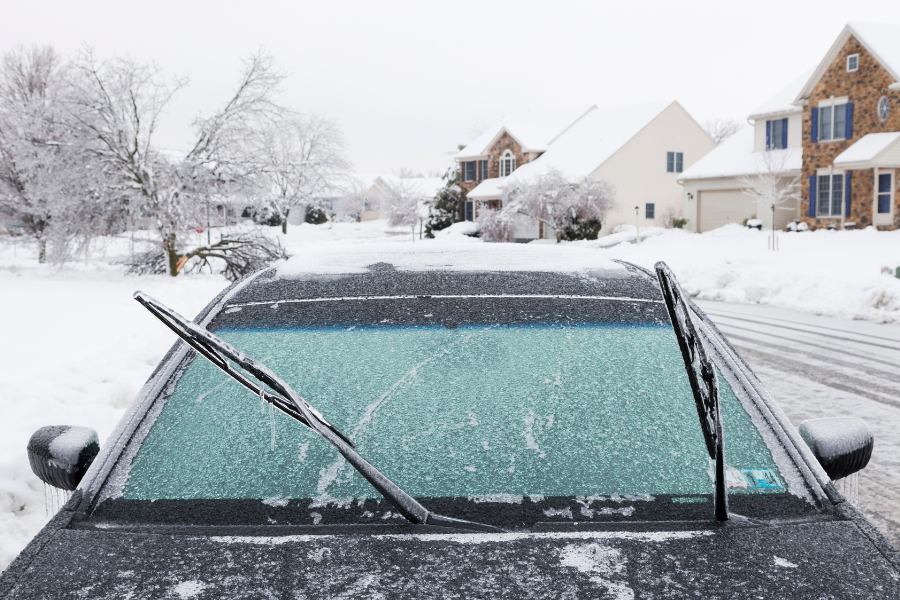
- Properly defrost your windows before driving for full visibility.
Tire Pressure
Colder temperatures cause tire pressure to drop, with every 10°F decrease leading to a reduction of about 1-2 PSI (pounds per square inch). Properly inflated tires are essential for optimal handling and stability! Inflate your tires to the PSI recommended in your car’s manual or on the driver’s side sticker.
Getting Stuck
Snow-covered roads or icy ditches can leave you stranded. To prepare for such situations:
- Keep a snow shovel in your vehicle to clear away snow.
- Carry sand or cat litter to provide extra traction for your tires.
- Drive cautiously in areas prone to snowdrifts or unplowed roads.
- Winterize your car! Keep in mind what you should keep in your vehicle for the chilly months.
- Ice scraper
- Warm items – coat, hat, gloves, scarf, blanket
- Jumper cables
- Nonperishable snacks and water
- A fully charged phone + a charger
- Basic/mini First Aid kit
By taking proactive steps to protect your home, vehicle, and personal safety, you can minimize the risks and disruptions that winter weather brings. Remember, a little preparation now can save you from costly repairs and dangerous situations later. Stay warm, and stay safe!