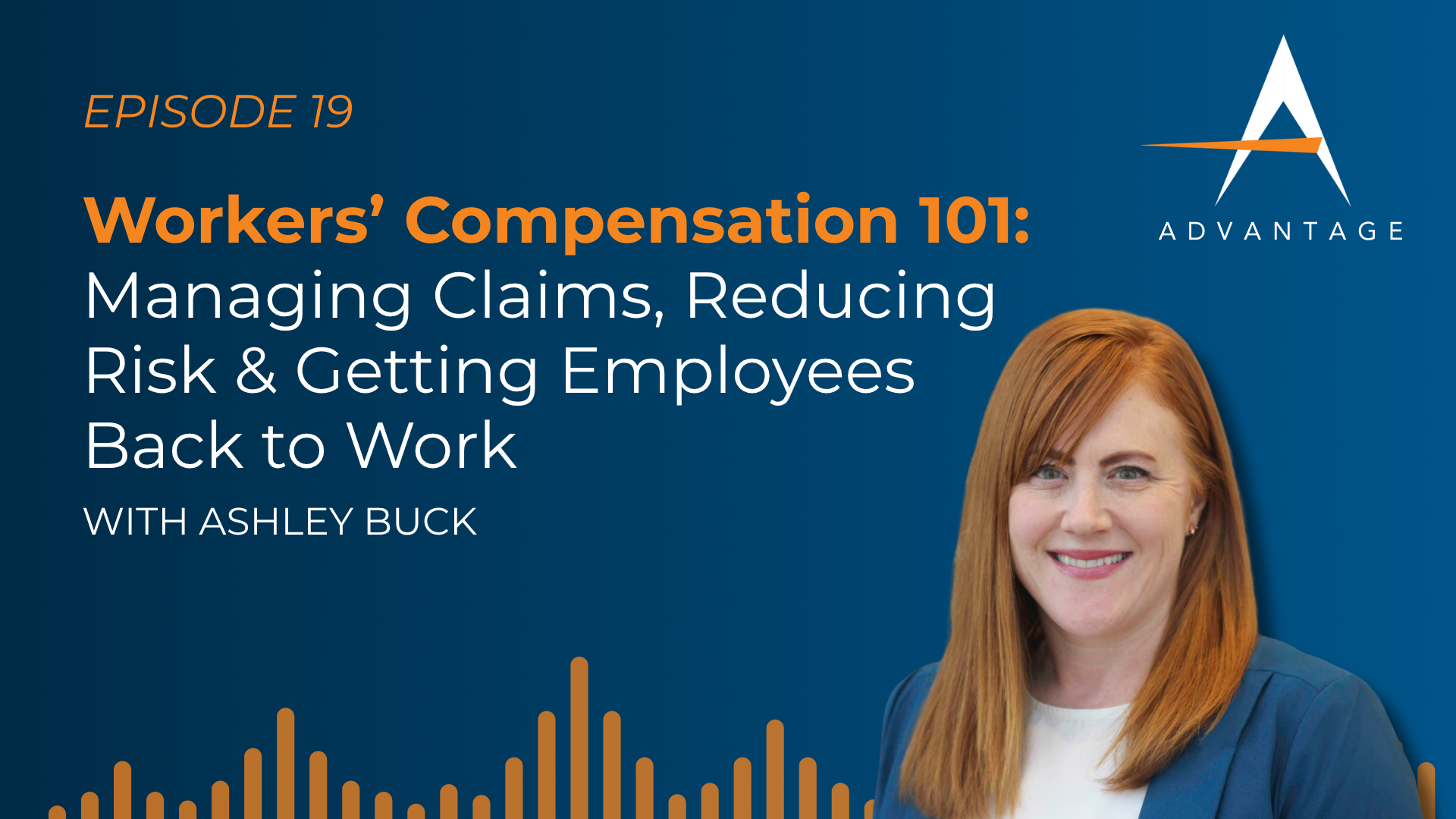
Workers’ Compensation 101: Managing Claims, Reducing Risk & Getting Employees Back to Work
Workers’ compensation is one of those coverages business owners often set and forget, until a claim happens. While rates have trended down in many states over the past several years, understanding how to manage a claim can still make a major difference to your bottom line. We sat down with Ashley Buck, Director of Claims and Risk Management, to break down what every business owner should know about managing workers’ compensation claims effectively. Listen wherever you get your podcasts or watch below on Youtube.
Why Employee Education Matters From Day One
The most common issue employers run into is confusion. When an employee gets injured, they often do not know who to call or where to go. That confusion can slow down treatment and complicate the claims process.
New hires should understand workers’ compensation basics the moment they walk through the door. They need to know how to report an injury and who to contact, whether that is an HR representative or a direct manager. A strong safety program, including proper use of personal protective equipment, should be part of onboarding before an employee ever starts the job.
Set Up a Medical Provider Relationship in Advance
One overlooked step is establishing a relationship with a medical provider before an injury ever happens. Having a go-to clinic or urgent care facility allows the provider to build familiarity with your employees and your business over time. This consistency can lead to faster, smoother care when an injury does occur.
Emergency Room vs. Urgent Care
Not every workplace injury requires a trip to the emergency room. Employees should understand that the emergency room is reserved for true, life-threatening emergencies, such as amputations, eye injuries, or situations requiring hospitalization. For minor injuries like a cut or a strained back, an urgent care clinic is usually the better and cost-effective choice.
Medical Only Claims vs. Indemnity Claims
Understanding the difference between medical only and indemnity claims is essential for managing your experience modification rate, commonly known as your mod.
- Medical Only Claims: Involves treatment with zero lost time from work, such as a treat and release visit for a minor cut. These carry less weight, with only around 30 percent of the claim cost factored into your mod calculation.
- Indemnity Claims: Involves lost work time where an employee may eventually return in a light duty capacity at a reduced pay rate. These involve more cost and affect your mod significantly more than medical only claims.
The Power of a Return to Work Program
A strong return to work program can make a real difference in both employee outcomes and your mod. Light duty work keeps injured employees engaged in a normal schedule instead of sitting at home. This structure helps employees stay connected to their workplace routine while they recover.
If your business cannot accommodate light duty work internally, many insurance carriers can help place employees with a nonprofit organization during recovery. This might mean volunteering with an organization like the Red Cross or helping at a local charity. Staying active in the community during recovery has been shown to help employees return to full duty faster.
Understanding Split Point and Timing
Timing plays a bigger role in managing your mod than many business owners realize. Your experience mod is locked in six months prior to your renewal date, which means the window to make an impact closes earlier than most people expect. This is often referred to as the split point.
Because of this timing, it is worth reviewing open claims well before renewal, ideally around the nine-month mark. A proactive review can identify claims that may still be lowered before they lock in for the next renewal period. Working with a broker or risk management team that tracks this timeline closely can meaningfully affect your final mod.
How Claims Reviews Help Lower Your Mod
A six-month claims review typically involves reaching out to claim adjusters to check on open reserves and push for faster resolution. Reserves, the estimated cost carriers set aside for a claim, have a direct impact on your mod. Getting claims closed faster and reserves reduced can help push your experience mod below the average benchmark of 1.0.
A mod below 1.0 signals a better-than-average risk profile, while a mod above 1.0 signals higher risk. This number matters beyond your insurance premium. Many general contractors will not work with subcontractors whose mod creeps above a 1.0, making this a critical number to monitor closely.
Spotting Trends to Prevent Future Claims
Reviewing claims regularly does more than help close existing cases. It can also reveal patterns, such as multiple back strain injuries occurring at the same job site or repeated hand injuries from similar tasks. Identifying these trends allows a risk management team to recommend changes to job descriptions or personal protective equipment before more injuries occur.
When to Report to OSHA
OSHA reporting requirements are strict, and missing a deadline can create serious complications. Employers must adhere to the following mandatory reporting windows:
- Within 8 Hours: Any workplace fatality.
- Within 24 Hours: Severe injuries, including loss of an eye, loss of a limb, or any inpatient hospitalization (including weekends).
OSHA involvement is not purely punitive. OSHA offers guidance on how similar injuries could be prevented in the future. Many employers find that OSHA walkthrough inspections and employee interviews ultimately work in their favor by identifying practical safety improvements.
Build a Relationship With Your Carrier
One of the most valuable and underused workers’ compensation resources is the nurse triage line. Most carriers offer a phone line where an employer can report an injury and a nurse will guide the employee through next steps, directing care and starting the claims process immediately. This can dramatically simplify what is often a stressful and confusing moment for both the employer and the injured employee.
Getting to know your carrier before an incident happens, rather than during a crisis, can make the entire claims process smoother. A carrier who understands your business and specializes in workers’ compensation can act as a true partner rather than just a policy provider.
Frequently Asked Questions
What is the difference between a medical only claim and an indemnity claim? A medical only claim involves treatment with no lost work time, while an indemnity claim involves lost time from work and typically has a greater impact on your experience mod.
When does my workers’ compensation mod get locked in? Your experience mod is generally locked in six months before your policy renewal date, which is why proactive claims reviews around the nine month mark are so important.
When do I need to report an injury to OSHA? A workplace fatality must be reported to OSHA within eight hours. Severe injuries, such as amputations, eye injuries, or inpatient hospitalizations, must be reported within 24 hours, including on weekends.
What is a nurse triage line? A nurse triage line is a service offered by many workers’ compensation carriers that allows an employer to call in an injury and have a nurse guide the employee’s care and start the claim immediately.
Why does my mod matter to general contractors? Many general contractors will not hire subcontractors with a mod above 1.0, since a higher mod signals a higher risk profile. Keeping your mod low can directly affect your ability to win new contracts.
Listen to the Full Podcast Episode
To hear the conversation, check out The Accel Advantage Podcast on your favorite streaming platform.
- Search The Accel Advantage on all platforms (Spotify, Apple Podcast, Youtube, Amazon Music, iHeartRadio, and more)
Read the accessible transcript here: Claims Episode Transcript. We provide transcripts to ensure accessibility and a better user experience for all visitors.
The post Workers’ Compensation 101: Managing Claims, Reducing Risk & Getting Employees Back to Work appeared first on The Accel Group.